

Blog > How to Spot a Good Home Deal in a Changing Market

If you’ve been hoping to finally find a great deal on a home — especially after the wild real estate market of the past few years — you may be closer than you think. Today’s shifting market is creating new opportunities for patient, prepared buyers to save money and secure strong terms. And one of the biggest advantages right now comes from a group of homes that have one thing in common:
They’ve been sitting on the market longer than usual.
According to the latest data, homes that stay on the market past the first few weeks often become stronger negotiating opportunities for buyers. That means lower prices, more flexibility, and in many cases, extra concessions.
Let’s break down what the data is telling us — and how you can use it to your advantage.
The Opportunity: Homes That Haven’t Sold Yet
While many homes still sell quickly, there are also properties that don’t move right away. When a home sits on the market longer than expected, sellers begin to make adjustments. Maybe they overestimated the price initially, maybe the home needs updates, or maybe it simply didn’t attract the right buyer during the first wave of showings.
No matter the reason, the result is the same:
📉 The longer a home sits, the more likely the seller is willing to negotiate.
And the data proves it.
The Latest Insight: Homes That Have Been Sitting Are Selling for Less
The graph below shows a clear pattern:
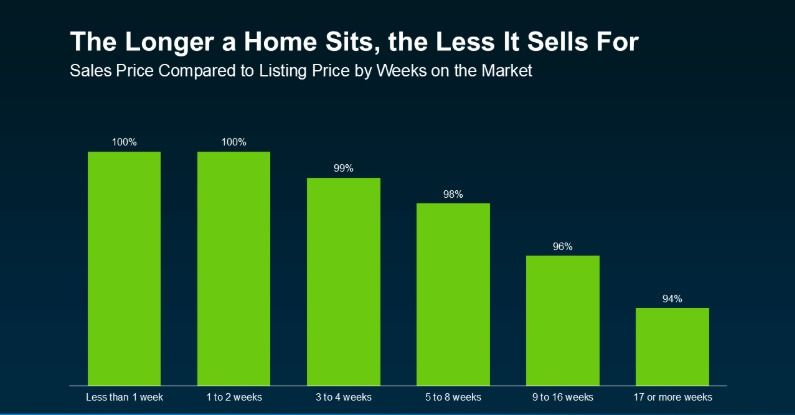
Homes sell for more when they sell faster — and for less when they sit.
If a home has been on the market for 3–4 weeks, sellers are already showing signs of softening. By the time a home reaches 7–8+ weeks, the average sale price drops significantly.
This is where opportunity grows for buyers.
Why? Because sellers want movement. And that gives buyers more power to negotiate — on price, closing cost credits, repairs, interest-rate buydowns, and more.
As explained:
“Less competition means fewer bidding wars and more room to negotiate on the asking price, inspection repairs, and other concessions, to attract those prospective buyers who are still looking.”
In other words: if you’re seeing homes pop up again in your searches — or if you notice price reductions — that’s your cue to pay attention.
How Much Could You Save? The Numbers Tell the Story
The second graph breaks down potential savings for buyers based on how long a home sits on the market.
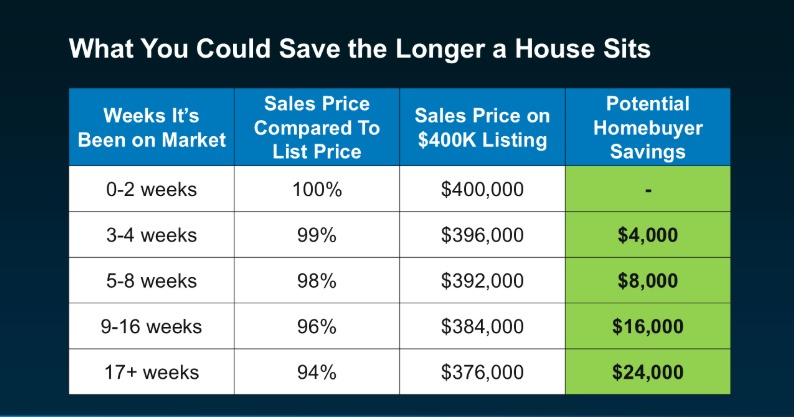
For example:
-
0–2 weeks on the market: Sellers still have the upper hand
-
3–4 weeks: Negotiation power shifts — buyers may save ~$4,000
-
5–8 weeks: Buyers could see savings of $10,000 or more
-
9+ weeks: Buyers may save $20,000+ depending on price point and seller motivation
These aren’t guarantees — every home and market behaves differently — but the patterns are undeniable. If you’re a buyer who’s been feeling stuck in a competitive, tightly priced market, this data should give you hope.
If You’re a Buyer Looking for a Better Deal, Start Here
If your goal is to stretch your budget further, avoid bidding wars, or find a seller who’s motivated to work with you, focusing on homes that have been on the market longer may be your best strategy right now.
These homes are often:
✔️ More negotiable
✔️ More flexible on closing timelines
✔️ More willing to offer credits or concessions
✔️ More open to appraisal gaps or repair requests
And best of all, you may save thousands.
Bottom Line
The market is shifting, and real opportunities are opening up for buyers — especially those who know where to look. Homes that have been sitting for a few extra weeks could be the key to unlocking a great deal.
If you’d like help identifying the best opportunities in today’s market — or want guidance on how to negotiate the strongest terms — I’m here to help.
📩 Send me a message anytime, and let’s start your home search with confidence.